Category: Funding

Mental Health Awareness Week – Midlothian Projects Making a Difference

This May 11-17th marks Mental Health Awareness Week, a national campaign from the Mental Health Foundation which aims to highlight the importance of achieving good mental health.

This year, the theme is action – raising awareness is vital, but real change comes when we take action too. That’s why we’re sharing success stories from local projects funded through the Communities Mental Health & Wellbeing Fund that have made a real impact in Midlothian.

What is the Communities Mental Health & Wellbeing Fund in Midlothian?

The aim of the fund is to support community-based initiatives that promote good mental health and wellbeing and/or mitigate against the impact of distress and mental ill health within the adult population. MCA was appointed by the Scottish Government to distribute the fund in Midlothian and ensure the fund has a strong focus on prevention & early intervention. The fund is now going into it’s sixth year, with the next fund round due to open in Autumn 2026.

Fund Success Stories

We’ve pulled together a selection of success stories from projects that were awarded funding during year 4 (2024/25) of the Communities Mental Health & Wellbeing Fund in Midlothian. Find more fund case studies in our year 3 showcase blog. See the full list of Year 4 projects funded on the Scot Gov website.

Click on a project below to see what positive impacts they’ve made.

Dalkeith Petanque Club

The Dalkeith Petanque Club is free and open to everyone in the community, they aim to provide a welcoming and inclusive space to encourage people to get active, socialise, and connect over their favourite sport. Dalkeith Petanque Club were awarded a micro-grant of £1,000 to upgrade the area around the piste, ensuring it is accessible to anyone who wishes to play.

Sandy Howden from the Dalkeith Petanque Club writes,

“The biggest achievement by far which I am particularly proud of is when one of our members asked me if he could bring his son who has autism and ADHD. I said certainly. He came down and within months, took to the game and is now one of the brightest star players in Scotland. He has turned into a confident, bright young man with all the deserved attention he gets, especially from outside the club. He conducts himself brilliantly amongst adults at big competitions around the country.

I am also proud at how the petanque club has embedded itself into the community and through holding competitions, has repeatedly raised money for other local charity groups. The way the club works is you never play with the same player every session, this allows everybody to get to know each other. We now play in a league and members travel five times a year to clubs from Selkirk to Penicuik. There are 10 clubs in the league – we have a wonderful reputation of being one of the friendliest clubs!

I could write a book about this journey in building up the piste and club to being (in my opinion) one of the best clubs in Scotland. The public can play on this piste and they do very regularly, 365 days a year.”

Pathhead Men’s Cafe

The Pathhead Men’s Club offers a weekly café to help reduce social isolation and loneliness amongst older men in the community. Pathhead Men’s Club were awarded a micro-grant of £2,500 to deliver their weekly café and develop links with the wider community.

Neil Heydon-Dumbleton from the Pathhead Men’s Club writes,

“We held a ‘Grumpies’ café every Thursday for older men in the village which was well attended, fulfilling our core plans. We also arranged visits with varying numbers of older men to The National Gallery, The Lothian Bird Sanctuary, and a visit to Summerlea Industrial Museum along with two classes of P4 pupils from Tynewater Primary School. We worked with other village groups on a fundraiser café for local charities, and raised £350 for Marie Curie during our ‘Easter Eggstravaganza’. We worked with the youth project to a very well attended games night and a soup station for Halloween guisers. Both of these involved the men working with all different ages of villagers. The older men repainted the village phone box, which is used as a book exchange and we also held a Christmas lunch for our members.

We have up to 20 older men who regularly attend the café, and in various numbers, the day-trips and Christmas lunch. We reach several hundered village residents working with other groups on the pop-up cafes and supported the Summerlea Museum trip for 40 school children, which wouldn’t have happened without our involvement.

It can be argued that working with a wide range of groups in Pathhead through the Pathhead focus group allows us to impact the 2000 local residents. The ‘Grumpies’ café has become well known in the village and spawned the ‘3 Cafes project’ following similar models for other groups in the village. We are particularly proud of feedback from the families of men who sadly died this year. They indicate they were having a real positive impact on them all, ‘My man wasn’t much of a talker, but when he went to the Grumpies, I always felt he had a little more conversation in him.”.

The Warblers

The Warblers support people with breathing difficulties through group singing to improve confidence, connection, and wellbeing. They were awarded £4,615 for their group sessions in Dalkeith.

“We are delighted that a growing number of Warbler members have been confident enough to sing in public to showcase what the Warblers are about. Most have never performed or sung in public before and have gained a lot of confidence from so doing.

The 2025 evaluation revealed that respondents felt the Warblers had a high or significant benefit towards their mood, self-confidence, and mental health.

Members have reported a wide variety of benefits from attending the Warblers, the main one being help to manage their health better and reduce medical interventions. Additionally many members reported feeling more socially connected with others. One said in their evaluation, ‘Because of my breathing I never used to go out and see anyone. Now I’ve got the Warblers to look forward to and I can meet people the same as me.’.”

Cruse Scotland

Cruse Scotland were awarded £4,740 to provide early emotional support to adults experiencing bereavement in Midlothian

“We were pleased with exceeding the target number of beneficiaries (20) and reaching 22 recently bereaved people in Midlothian. We are also pleased 18 participants agreed the support had significantly improved their health and wellbeing and reduced their feelings of loneliness and isolation.

The feedback we received from participants included:

‘After the first couple of sessions I felt like a weight was lifted from me. My volunteer was amazing, she made me realise how I was feeling was completely normal and helped me deal with the different emotions faced.

Case Study ‘Y’ contacted us after the death of her two siblings only a few months apart. She was finding it difficult to process the grief and felt it was damaging her health.

‘I was at breaking point and in a very dark place. My volunteer listened, showed no judgement, and was a breath of fresh air’.”

Mayfield & Easthouses Youth 2000 Project

Mayfield & Easthouses Y2K were awarded £10,000 for their Thriving Transitions project that offers a safe, inclusive space for young adults to develop life skills that are required for a positive transition into greater independence.

“One of the key achievements we are most proud of is the consistent engagement of 56 young adults over the past year, many of whom faced barriers including social isolation, poor mental wellbeing, and limited confidence.

Through 52 weekly sessions, the project has provided a safe and supportive environment where young adults have been able to build trust, form positive relationships, and develop essential life skills. Participants who initially lacked confidence or were hesitant to engage have become more active within the group, contributing to discussions, trying new activities, and supporting their peers.

A particularly impactful aspect of the project has been the focus on relationship-based practice and consistency. By delivering weekly sessions with the same staff team, young adults have developed trusted relationships, which has supported open conversations around mental health, risk-taking behaviours, and personal challenges. We are also proud of our partnership approach, bringing in external organisations to deliver targeted inputs on safety and wellbeing. This has helped young adults gain practical knowledge and make more informed decisions in their daily lives.

Edinburgh Community Yoga

Edinburgh Community Yoga delivers trauma-informed yoga classes to support mental health & physical wellbeing. They were awarded £9,841 to deliver classes in Dalkeith.

“Our chair teacher is from the Dalkeith area, has CPTSD and is in recovery. Her lived experience allows the participants to feel seen and represented which makes a huge difference to how they feel in the space.”

Words from the participants demonstrate the impact the class has:

‘This class greatly improves my quality of life.

‘The class has been so beneficial to my health and wellbeing.

‘I am learning self care/acceptance – that wherever I am on the day is ok.’

Home Link Family Support

Home Link Family Support supports families with young children. They were awarded £9,125 to run Adult Wellbeing Peer Support Groups (for parents who have children with additional support needs) in Midlothian. Project achievements include:

  • Identifying and responding to a real needs of participants
  • Developing a wellbeing toolkit to be used for future groups
  • Developing a ‘tips sheet’ for parents navigating the ASN journey, aiming to promote lived experience and empower the group participants in contributing their voices.
  • Facilitating the sharing of knowledge such as about schools and processes and rights to support.
  • The reduction in isolation, and individuals knowing that there are others sharing similar experiences.
  • Seeing parents build their confidence around the fact that it’s not that they are getting things wrong, but that it is simply hard.
  • Parents starting to organise guest speakers to come to the group themselves, and some parents developing a real sense of ownership of how the group continues to develop in the future, with a desire to link with more people.
  • Space to connect emotionally rather than it be simply about sharing information or training, this benefits wellbeing as it is empowering and not just about gaining knowledge.

“We are proud of both the therapeutic aspect and lived experience aspect that group facilitators have. We feel this enhances attunement, safety in the relationships, and group members respond really well to that. Its not only simple peer support or top down led, but has a tangible sense of collaboration.”


What action will you take this Mental Health Awareness Week?

Visit midspace.co.uk to read about simple, practical steps you can take for yourself, for someone else, and for your community.

Get involved in your community by offering your time & skills through volunteering.


Keep up to date with MCA by signing up to our weekly newsletter or following us on social media:

Midlothian Leads the Way in Trauma Awareness & Wellbeing

As Midlothian marks its first-ever Trauma Awareness Week, we are also excited to announce the opening of the Communities Mental Health & Wellbeing Fund—an important step towards supporting local initiatives that enhance mental health and wellbeing across our communities. With £249k available to local organisations, this fund is a unique opportunity to create lasting change, just as Midlothian’s Trauma Awareness Week is helping to set the stage for greater understanding and support around mental health.

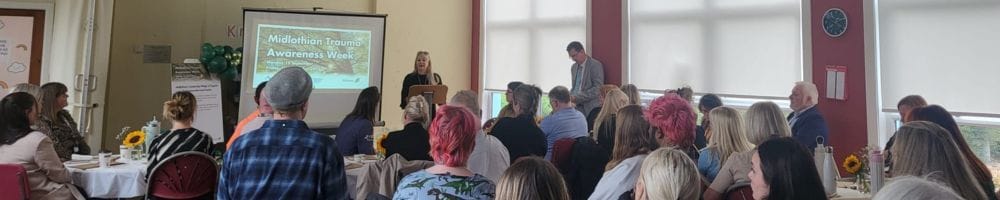
Midlothian Trauma Awareness Week: A First For Scotland

This week, Midlothian is leading the way with the first-ever Trauma Awareness Week in Scotland. Launched by Midlothian Council, the week focuses on key principles of trauma-informed care: Collaboration, Trust, Safety, Empowerment, and Choice.

In her opening speech at the launch event on Monday, Midlothian Council’s Chief Executive, Dr Grace Vickers, shared the aims and goals behind this initiative:

“The aim of the week is to raise awareness and understanding of the impact that trauma can have on individuals, families and communities, while also showcasing the positive and supportive steps that staff, services and organisations across Midlothian are taking to support everyone to grow, recover and thrive.”

The week focuses on key principles of trauma-informed care: Collaboration, Trust, Safety, Empowerment, and Choice. Events will run throughout the week, providing local professionals and community members training on how to support those affected by trauma.

The Communities Mental Health & Wellbeing Fund

As Midlothian’s Trauma Awareness Week wraps up this Friday, MCA are excited to open applications for the Communities Mental Health & Wellbeing Fund, with a total of £249,914.16 available in year 5 to support local projects. The fund has a strong emphasis on collaboration, partnerships, capacity building and the development of creative projects that can work at a very grassroots level, together with local people.

One important aspect of the fund is its focus on trauma-informed practice. As Midlothian embraces trauma awareness and works towards becoming a trauma-informed community, it’s vital that organisations receiving funding can demonstrate a commitment to this approach. All successful projects will given support to access free trauma-informed training.

The Communities Mental Health & Wellbeing Fund is now open for applications, with three distinct grant streams to choose from. Whether you’re offering direct mental health support, creating safe spaces for individuals to connect, or providing education on wellbeing, we encourage you to apply. The deadline for applications is Friday, 31 October at 12PM.

END.

£249K Fund Announced for Mental Health & Wellbeing in Midlothian

We are excited to announce that Years 5 & 6 of the Midlothian Communities Mental Health and Wellbeing Fund for Adults will open on Friday 19 September 2025.

Fund Focus & Objectives

This highly valued fund supports people’s mental health and wellbeing while offering opportunities for community connection. It focuses on early intervention and prevention, helping communities create the conditions for good mental health at a population level.

Midlothian Community Action (MCA) has been appointed by the Scottish Government to distribute the funding locally. The fund is designed to be accessible and supportive of grassroots organisations, with a strong emphasis on collaboration, inclusion, and impact.

All grants are aimed at grassroots community organisations to promote mental health and wellbeing and/or protect against the impact of distress and mental ill health within the adult population in Midlothian.

Grant Streams in 2025/26

In Midlothian there will be a total of £249,914.16 available in Year 5. Funding will be distributed across three grant streams:

  • Micro Grants – up to £2,500
  • Small Grants – up to £10,000
  • Large Grants – up to £30,000

To compliment the small and large grant steams, up to an additional £5000 per organisation will also be available for capital spend.

This year, the fund is part of the Scottish Government’s Fairer Funding Pilot, offering multi-year support to help local organisations plan for the long term and deliver sustainable impact.

Year 6 of the fund is not guaranteed and is subject to Scottish Government budget approval, as the grant offer letter states: “The value of the grant payable in year 2 is an indicative confirmation and cannot be taken as a guarantee. All indicative funding commitments are subject to the outcome of any spending review by the Scottish Government and approval of the annual Budget Bills by the Scottish Parliament during this period.”

MCA will welcome applications from both one and two yearlong projects. 

Key Dates

Applications open: Friday 19 September 2025

Applications close: Friday 31 October 2025.

To support applicants, MCA will host 1:1 online appointments on Monday 22 September. Email magdalena.clark@mca.scot to book a slot.

We’re also hosting two lunchtime information sessions all about the fund, on Wednesday 24 September and Monday 06 October.

Is your organisation ready for AI? | Q&A with Dr Louise Drumm

AI isn’t the future – it’s already here, and it’s changing the way people work across every sector.

We’re aware that the third sector is having ever-increasing demands put on them, and we can’t keep working in the way we have been. That’s why we’ve partnered with Edinburgh Napier University to host an Innovation Morning, to look at how local third sector organisations can harness AI and automation to safely and ethically make us more effective. We’ll also be joined by Business Gateway Midlothian and Tyne Esk Clld Fund to find out what expert support and funding there might be available to help us innovate in other areas.

Whether you’re new to AI or already using it to streamline admin tasks or analyse data, this event will help you build confidence, understand risks, and make the most of the tools available.

Meet Dr Louise Drumm, Our Guest Expert

The AI session is being led by Dr Louise Drumm, Associate Professor in Digital Education in the Department of Learning and Teaching Enhancement at Edinburgh Napier University. We asked her a few questions ahead of the event.

Can you tell us about your background in Digital Education and your research into AI?

“I’ve worked in universities across Scotland and England for over 20 years, and I’m interested in all the ways that technologies can support – or sometimes hinder – learning and working. I teach others how to design and deliver online or use technology effectively in the classroom, and I’m always reflecting on how I use technology myself, whether personally or professionally. I’ve also researched attitudes and experiences around generative AI among learners, educators, and other professionals. Generative AI brings exciting opportunities for how we work and learn, but we need to think carefully about what appropriate and responsible use looks like.”

When we talk about GenAI, what exactly do we mean?

“GenAI is newer development within the much larger and older field of artificial intelligence. It refers to a range of easy-to-use tools which create content – whether text, images, video or audio – in response to a user’s request. These systems are trained on vast datasets and use patterns in that data to generate content that can feel quite human-like. Some people describe GenAI like ‘predictive text on steroids’ and I like this description because sometimes it can get things wrong, just like predictive text. Well-known GenAI tools include Copilot, Google’s Gemini, ChatGPT, Dall-E, but more GenAI is being integrated into other tools like Microsoft Word, Canva, Grammarly and even Google search results.”

Why did you approach MCA from Edinburgh Napier University to run this workshop?

“I am keen as a researcher to share my expertise with different communities and to find out more about how people are using AI in their work. We were keen to work with a wide cross-section of third sector organisations and approached MCA as they have such a strong network across Midlothian. The event is supported by Napier’s public engagement team and funding, and we are always happy to discuss any future collaborations.”

How are charities and third sector organisations already using AI in their work?

“The areas which these organisations seem to be using AI are streamlining admin, fundraising, service delivery, and data analysis. However, according to The Software Bureau it is mainly larger charities who have embedded GenAI and are benefiting from its use, and only 6% have a formal AI policy, with over half of staff having received no AI training.”

Some people are concerned that AI is unethical or even dangerous – how do you respond to these concerns?

“There are many complex ethical issues with AI, even for an individual user. The first priority is always to ensure we are acting within the law. But beyond that, there are also serious concerns about how these tools are developed and used, such as their environmental and societal impact, to name just two. I always advocate for making informed choices about any tool that we use, so this means engaging with reliable evidence and making decisions based on knowledge, not than hear-say or the hype on social or other media, which can lean towards extreme pro- or anti- GenAI views. A little understanding goes a long way, and I fully support anyone who, having thought through the ethical implications, decides that GenAI use is not right for them.”

What can attendees expect to take away from the Innovation Morning?

“Whatever your current knowledge about GenAI – whether you are completely new to it or already experimenting – you can expect an interactive session designed to help you to think through the pros and cons of using GenAI in their work. You’ll have the chance to get hands-on with some GenAI tools, explore real life examples relevant to you, and take away practical resources which you can use in your role straight away. The focus will be on making informed, responsible choices – no technical expertise required.”

END.

Communities Mental Health & Wellbeing Fund Showcase

Last week, we hosted a ‘Meet the Funder’ event for recipients of the Midlothian Communities Mental Health and Wellbeing Fund (CMHWF) Year 3.

It was a wonderful chance to highlight the impact of the fund on a variety of projects across Midlothian. Thank you to everyone who joined us and took part in celebrating these incredible projects. Presentations from the day are available to download below.


Edinburgh Community Yoga

Edinburgh Community Yoga is a not-for-profit social enterprise working to make yoga and its many potential physical, mental, and social benefits more accessible to those who may benefit the most. ECY aim to minimise the financial, attitudinal and accessibility barriers that may prevent someone from attending a public yoga class by prioritising inclusivity. 

ECY received a small grant for their programme of yoga on social prescription, where they partner with GP practices and local agencies to offer (by referral) onsite trauma-informed yoga in areas of social and economic deprivation.


Youth 2000 Project – Thriving Transitions

Mayfield & Easthouses Youth 2000 Project (Y2K) was set up by the local community to provide universal youth work services using an informal, service-user led approach.

Y2K received a large grant for their Thriving Transitions project to support young adults during their transition to adulthood and greater independence.


Dalkeith Petanque Club

Dalkeith Petanque Club received a micro-grant for necessary equipment for their Piste in Dalkeith. Their story highlights the brilliant partnership working in Midlothian and how community groups can make a huge impact with a little support.


Home Link Family Support & Sure Start

Home Link received a large grant, working in partnership with Midlothian Sure Start to run a weekly wellbeing support group for parents with children who have additional support needs.


Women’s Aid East & Midlothian – Prescribe Nature

Women”s Aid East and Midlothian received a continuation of their Year 2 large grant, plus capital. This went towards implement Green Recovery of Women (GROW), a social green prescribing method, into their service delivery.


Of course, it wouldn’t be a Meet the Funder event without the funder. We were thankful to be joined by the Wellbeing & Prevention Unit Communities Team from the Scottish Government Mental Health Directorate, who provided more details about the CMHW Fund provision so far, and an overview of what’s to come.


See more photos from the projects in our slideshow video below:


END

Midlothian Charities Call on UK Government to Reimburse NI Increases

Midlothian Third Sector Interface published the following press release this week:

Midlothian charities are calling on the UK Government to ensure that support is provided to cover costs brought on by the increase in employers’ national insurance contributions (NICs).

Recent announcements from the UK Budget have raised extreme concern over the impact on charities and community groups across Midlothian. The increase in employer’s NICs from 13.8% to 15% is a further financial burden coming at a time when many organisations are already teetering on the edge of financial crisis. Without support from the UK Government to mitigate the impact of these increases, there is significant threat of redundancies and service closures across the voluntary sector.

For charities in Midlothian, the impact is already being felt. One Midlothian charity explained,

“It will cost us close to £100,000 extra per year in increases to NI contributions and the real living wage.”

Another local charity echoed this concern,

“The increase in national insurance contributions alone will cost us over £10,000 annually. We are already struggling to meet growing demand for our services.”

Charities in Midlothian do not operate in isolation; they complement and support public services, from mental health support and social care to youth services and food banks. The loss of these vital third sector services will not only be detrimental to the communities they serve but also to the public sector, which will be further strained, leaving people with nowhere to go.

These announcements come on top of Midlothian Council’s recent savings proposal consultation, which outlines potential cuts and reductions to public services across the county as the council seeks to lessen its budget shortfalls.

Unlike the public sector, which has been assured support to offset NIC increases, the voluntary sector has yet to receive any such commitment. We are calling on the UK Government to extend this support to employers in the third sector.

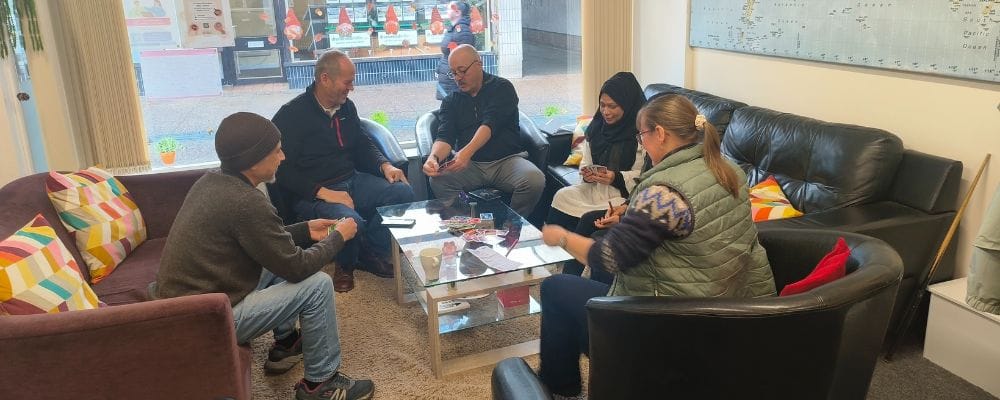
Volunteer Midlothian’s volunteer-led Conversation Café project.

END

Climate Action Funding: Top Tips and Insights from Our Workshop

Community-led climate action and environmental projects are essential in tackling today’s environmental challenges, but accessing the right funding is often a barrier. That’s why we teamed up with our colleagues at the Midlothian Climate Action Network (MCAN) to host a workshop all about funding.

Watch the full session now:


Re-cap

What makes a good funding application?

We reviewed some top tips to ensure your funding application is as good as it can be, including making sure that you write for an “intelligent outsider” and avoid acronyms and jargon.  

Common mistakes to avoid

There can be a wide variety of reasons why funding applications are rejected, but in MVA’s experience there are a few comments that crop up over and over again. These include not clearly linking the activities proposed with the impact expected, not answering questions asked in the application and not providing proof for statements such as “we have a long history…”.  

Key climate-action & environmental funding providers

Click through to the presentation here: MCAN Funding Event Presentation FINAL to find a list of funders that provide funds for climate and environmental projects within Midlothian. For SCVO members, you can access their Funding – SCVO page that allows you to search for funding opportunities specific to the project you are planning.  

Visit our Funding page to find out more about third sector funding in Midlothian. 

Contact Us

We’re here to help! You can email us with any questions or to set up a one-to-one meeting, at info@mca.scot.

£247k Fund Launching for Midlothian Community Groups

We are excited to announce that Year 4 of the Midlothian Communities Mental Health and Wellbeing Fund for Adults launches on Monday 9 September 2024. We will distribute a total of £247,983.21 to local third sector organisations and community groups by the end of March 2025.

Fund Purpose and Objectives

This fund, highly valued and eagerly anticipated, aims to support people’s mental health and wellbeing while offering opportunities for community connections. It focuses on funding activities that address mental health challenges early or prevent the deterioration of wellbeing. Midlothian Third Sector Interface has been appointed by the Scottish Government to distribute the funding locally. The fund emphasizes prevention, early intervention, and supporting grassroots community groups in tackling mental health inequalities. Organisations are encouraged to work together, and the fund’s processes are designed to be easy to understand and accessible. We seek to fund group projects that promote good mental health, foster meaningful and supportive connections within communities, and help individuals find a sense of purpose.

History and Evolution of the Fund

The fund was initially established to respond to the mental health effects of the Covid-19 pandemic. In Year 2, the fund expanded its scope to address the cost-of-living crisis. Year 3 continued to emphasize the importance of supporting mental health and wellbeing through tough times, particularly for those living in poverty or experiencing work-related distress.

Year 4 Focus and Objectives

In year 4, the grant will continue to support community-based initiatives that promote and develop good mental health and wellbeing. It also aims to mitigate and protect against the impact of distress, anxieties, diagnosed mental ill health, and neurodiversity within the adult population. The fund is particularly focused on addressing social isolation and loneliness, as well as preventing suicides.

Grant Streams in Year 4

Year 4 will continue the existing distribution model, dividing the fund across three separate grant streams:

  • Microgrants: Up to £2,000 (min £500)
  • Small Grants: Up to £10,000
  • Larger Grants: Up to £30,000

To complement these grant streams, up to £5,000 per organisation will also be available for capital spending. Both new projects and existing ones that demonstrate impact and progress are encouraged to apply.

Oversight and Community Involvement

The model used in Midlothian has been replicated across Scotland over the last three years. Every Third Sector Interface (TSI) and voluntary group in the country has been involved in raising awareness of mental health and wellbeing through community-based activities.

In Midlothian, the fund is overseen by a team of staff and volunteers from the TSI, Midlothian Council, Health in Mind, NHS Lothian, and Midlothian Health and Social Care Partnership. Like the previous years, the year 4 funding—informally called “the Sunflower Fund”—emphasizes collaboration, partnerships, capacity building, and the development of creative projects that operate at a grassroots level.

In year 4, people with lived experience are again involved in the fund’s administration and decision-making processes. The Detailed Fund Guideline outlines various aspects of the fund, continuing the year 3 theme of building on existing collaborations while empowering new ones.

A Message from Our Chief Officer

“We are delighted to have been given this money again to support local organisations in such difficult times of austerity and scarce funding streams. We strongly believe in community strength and spirit to support each other, learn from each other, and connect. Throughout the years, we have seen evidence of good partnership working, and we will encourage this yet again this year to leave a lasting impact and pave the paths for future collaborations.
We know that Midlothian’s communities are committed to supporting good mental health and wellbeing, whether this is through specialist trauma-informed practices, walking and talking, or simply a cup of tea and a blether. I believe the Fund will enable more people to make social connections and access opportunities that promote good mental health, prevent worsening of wellbeing, and empower people to overcome mental health challenges.”

Dr Lesley Kelly

Chief Officer, Midlothian Third Sector Interface

Third Sector Funding: Have Your Say

MVA are hosting an online session on Tuesday 13 August, 14:00-15:00 to discuss the Social Justice and Social Security Committee’s third sector funding principles consultation.

This is our opportunity to tell the Scottish Government how they can improve their funding to make it fair, flexible, sustainable, and accessible to ensure that third sector organisations can keep providing the services and projects that are crucial to communities across Scotland.


In this session, we’ll dive into key questions and gather feedback to create a combined response to the consultation. We also encourage everyone to submit their own response before the deadline on August 16.

What is the Aim of the Consultation?

The Social Justice and Social Security Committee seeks to address the significant challenges faced by the third sector, including recovery from the pandemic, the cost of living crisis, years of underfunding, and poor funding practices. The Committee want to hear from both funded and funding organisations, to understand what can be done now to make the public funding process more efficient and sustainable. By submitting our views on the Scottish Government’s approach to funding, we can help champion the need for Fair Funding.

When Does It Close?

The consultation closes on Friday 16 August. Make sure to share your feedback before the deadline to ensure your voice is heard.

What Do We Mean by Fair Funding?

Fair Funding, as defined by the Scottish Council for Voluntary Organisations (SCVO), is a funding landscape that is fair, flexible, sustainable, and accessible. This includes longer-term funding models, accessible and consistent processes, and more unrestricted funding with in-built uplifts.

SCVO has divided their Fair Funding calls into four distinct definitions – multi-year funding, sustainable funding, flexible funding, and accessible funding. Read more on their website.

Consultation Background

For almost a decade, the Scottish Government has acknowledged the need for multi-year funding. In April 2023, the policy prospectus ‘New leadership – A fresh start’ committed to achieving fairer funding by 2026. Despite this, little progress has been made, highlighting the need for this consultation.

What Are the Questions?

The consultation includes specific questions for third sector organisations, covering five key topics. These will be discussed in our online session:

Longer-Term Funding Impact:

  • How would a shift to longer-term funding of three years or more support your organisation?
  • What specific challenges do you foresee in transitioning to such a funding model?
  • If relevant, please provide any specific examples of how your organisation has been affected by a lack of longer-term funding certainty.

Flexibility and Core Funding Needs:

  • In what ways would flexible, unrestricted core funding enhance your organisation’s operational effectiveness and governance?
  • What specific challenges do you foresee in transitioning to such a funding model?
  • If relevant, please provide any specific examples of how your operational effectiveness and governance have been affected by a lack of flexibility in your core funding.

Sustainable Funding and Inflation Adjustments:

  • How critical are inflation-based uplifts and full cost covering, including core operating costs, to the sustainability of your organisation?
  • What impacts have you observed or anticipate without these adjustments in your funding?
  • If relevant, please provide any specific examples of how your organisation’s sustainability has been affected by a lack of inflation uplifts and/or full cost covering.

Real Living Wage Commitments:

  • What challenges does your organisation face in ensuring all staff are paid at least the Real Living Wage?
  • How would improved funding arrangements support your organisation to meet this commitment?

Efficiency in Funding Processes:

  • What improvements in the application, reporting, and payment processes could make the funding system more efficient for your organisation?

More Information

Read more about the consultation here.

Read SCVO’s blog here.

Register for our online session here.

Let’s make fair funding a reality for Scotland’s #EssentialSector

Free Unrestricted Funding With Easyfundraising

MVA hosted an online event today with Becky Coleman at easyfundraising.org.uk.

Don’t worry if you missed the session, you can view the recording below:

You can download the slides from this session here.

How does easyfundraising work?

Brands see that easyfundraising has sent you to them, so they pay easyfundraising a commission when you start your shop from the easyfundraising website or app. If you make a purchase, a commission is generated, and they turn that into a donation.

Becky explained that there are over 8,000 retailers who will donate to your charitable organisation every time one of your supporters makes an online purchase through easyfundraising.

How do I sign up?

It is straightforward and free for organisations to register. Easyfundraising will undertake the due diligence and then set up an easyfundraising page on your behalf. They will even provide you with promotional materials and graphics to encourage your supporters to sign up with easyfundraising.

Your supporters can then go onto the easyfundraising page, select the retailer they wish to use, and shop as normal. The donation will be made at no cost to you or them. Supporters can also download the easyfundraising app or browser extension, which will remind them to use easyfundraising when making a purchase.

You will receive a quarterly donation from easyfundraising which is stress-free unrestricted funding. No reporting is required.

Participating retailers include Amazon, John Lewis, Tesco, and Argos. Your supporters can also raise funds when they book holidays, buy insurance, electricity, and office supplies!

There’s really no downside. You can register now at easyfundraising.org.uk/midlothian

Don’t want to miss any more MVA training sessions?

Keep an eye on our website, or our Twitter, Facebook, and LinkedIn pages.

National Lottery Funding – Briefing Blog

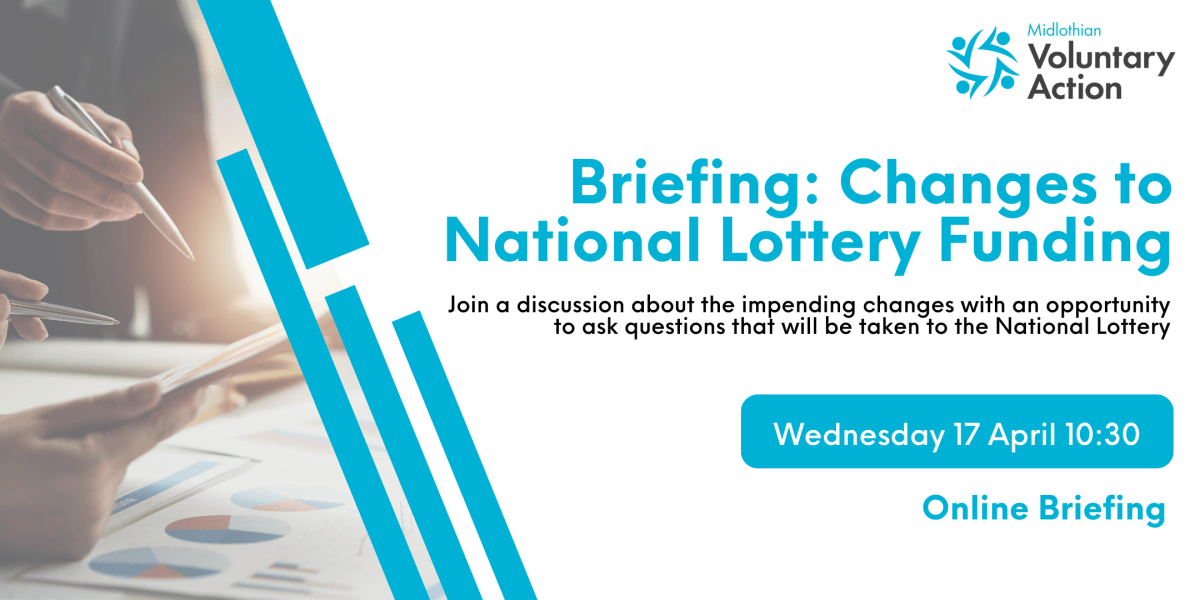
MVA recently held a National Lottery Funding Briefing to provide third sector organisations with an update on some changes the National Lottery are making to their funding streams.

Community Led, Improving Lives, and Cost of Living Support Scotland will close on the 21st August 2024. Applications will still be accepted until that date and assessed as usual. For further details you can contact your NL Funding Officer.

New streams of funding will come online at the end of the year, but no date has been confirmed yet. They will likely fall around these four priority areas.

Supporting communities to:

  • Come together
  • Be environmentally sustainable
  • Help children and young people access resources and experiences that help them thrive
  • Enable people to live healthier lives

National Lottery Awards for All, Young Start and Scottish Land Fund will remain open to applications with no closing dates.

Please do contact MVA if you would like support in applying to any of these funds before they close. The Development Team would be more than happy to review applications or provide advice about other potential sources of funding. See more about the support we can provide here.

Contact us at info@mca.scot or call our office, Monday – Thursday, on 0131 663 9471.

Slides from this briefing can be viewed here:


Applications open for CMHWB Micro Grant

Are you a community group looking for funding?

Year 3 of Midlothian Community Mental Health and Wellbeing Fund for Adults launched in the end of September 2023 distributing over £246 thousand to third organisations and community groups. It has already seen many successful applications for larger projects. There is a small fund of £7800 to support micro grant applications, to be distributed by the end of March 2024. The Fund aims to support people’s good mental health and wellbeing and to provide opportunities to connect with others in local community.

Local groups are invited to apply for funding from £200 up to £2500.

Known as “the Sunflower Fund” the funding has a strong emphasis on collaboration, partnerships, capacity building and the development of creative projects that can work at a grassroots level, together with local people. All these to ensure outcomes are inclusive and have maximum impact on a local level. In Midlothian the fund had been overseen by a team of staff and volunteers from the TSI, Midlothian Council, Health in Mind, and Midlothian Health and Social Care Partnership. The Lived Experience Working Group from Health in Mind will be assessing the funding applications. 

Fund enquiries should be directed to Magda Clark magda@volunteermidlothian.org.uk by 26 February 2024.

Read more about the Midlothian Community Mental Health and Wellbeing Fund here.

Midlothian Third Sector Interface