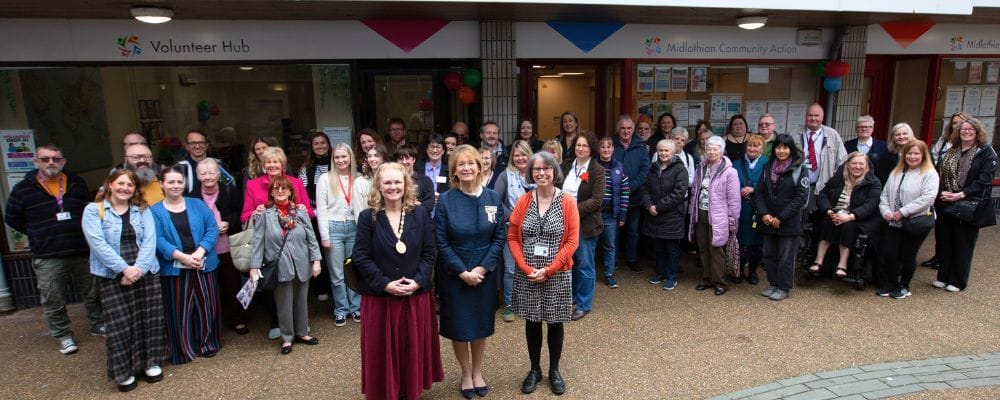
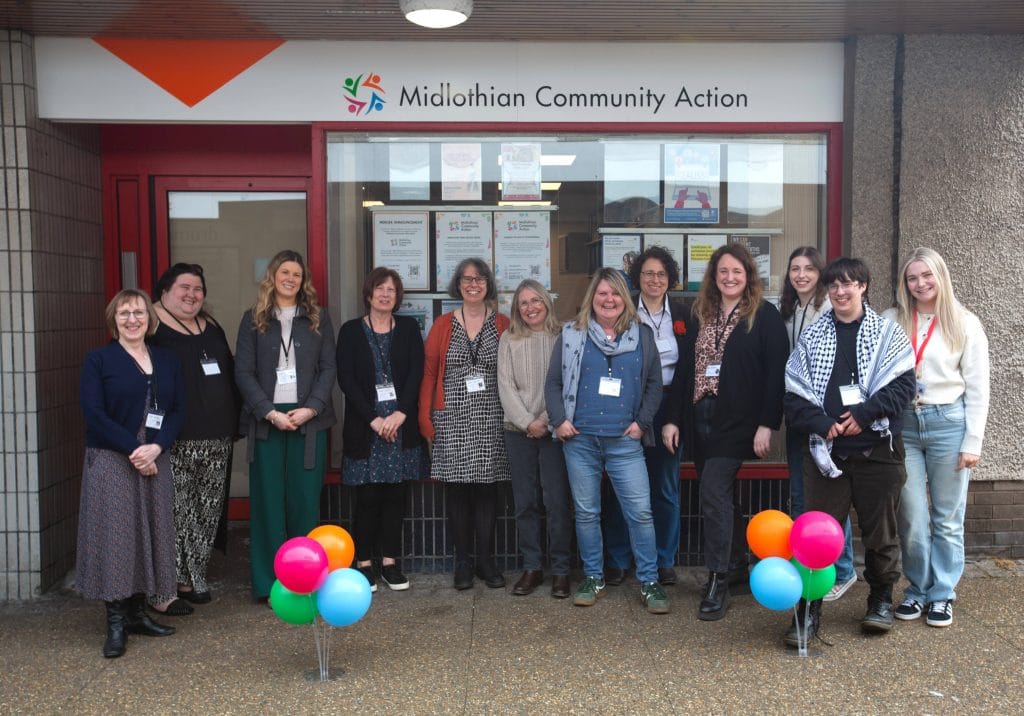
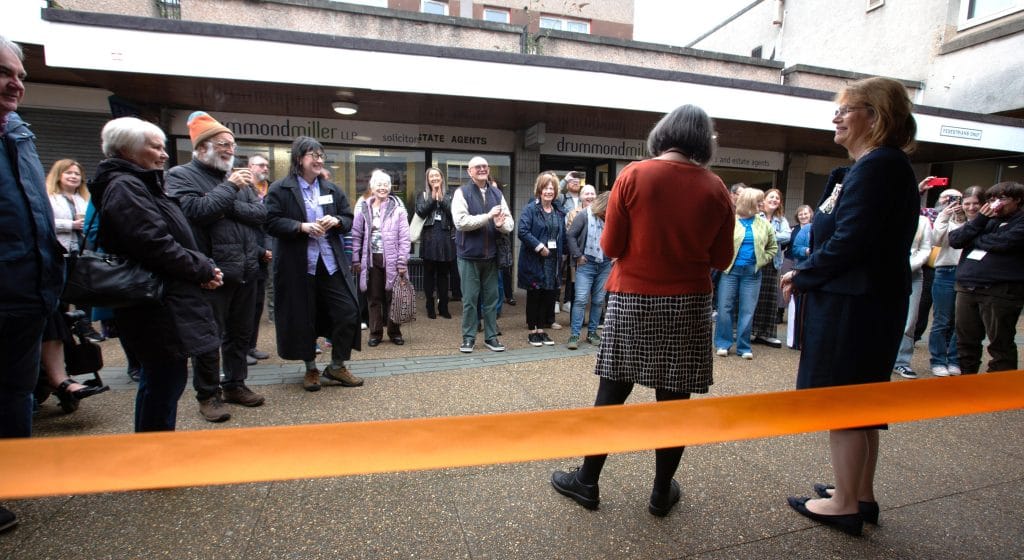
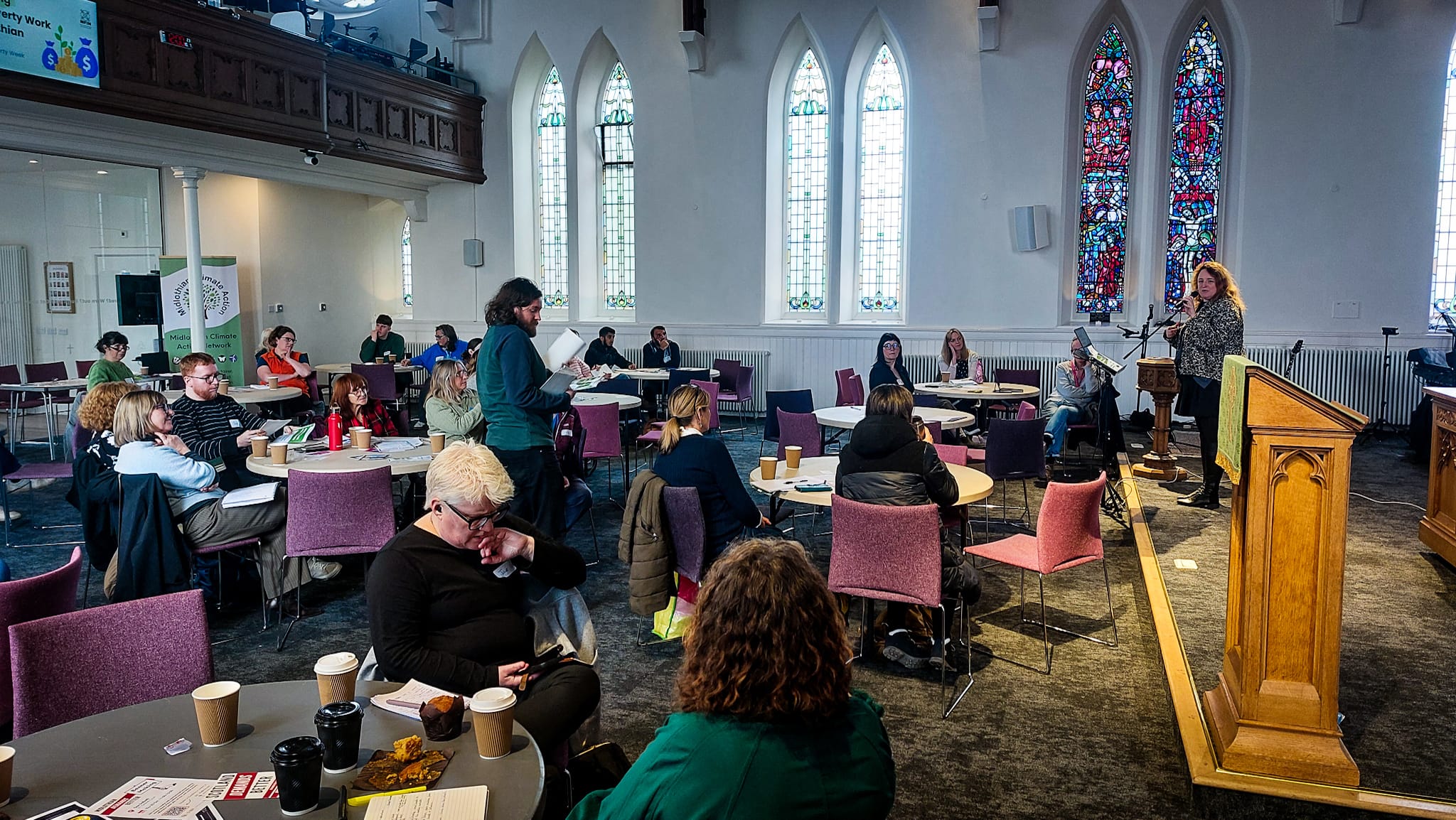
On Thursday 4 June 2026, volunteers from across Midlothian arrived at Newbattle Abbey College for our annual Midlothian Volunteer Awards Ceremony. We are delighted to celebrate all the incredible efforts of volunteers each year.
This celebration is a part of Volunteer’s Week, a national initiative where we appreciate volunteers across Scotland. It provides a great opportunity to highlight some of the fabulous volunteering projects that exist in Midlothian.
To kick off Volunteers’ Week 2026, we are excited to share findings from our Midlothian-wide Volunteer Satisfaction Survey. The survey was created to better understand the impacts of volunteering on volunteers themselves, to enhance volunteer support, and help organisations better demonstrate their impact.
This year is our second edition of the survey, which we hope to carry out annually and build upon year after year. We were please to receive 62 responses from volunteers across Midlothian, sharing their reflections on how volunteering has shaped their wellbeing, skills, confidence, and connection to their community. The responses clearly show the many positive impacts of volunteering:
99% said volunteering helped them achieve their goals
94% said they feel more a part of their community.
90% said they have gained confidence & self-esteem.
95% said they have made new contacts or friendships.
“Has been a great way of getting my self-confidence and self-esteem back and feel I am included in the community with my interaction with other volunteers and staff.”
Many spoke about increased confidence and self-esteem, stronger social connections, feeling more part of their community, improved health and wellbeing, and opportunities to develop and use their skills. These insights help highlight the often unseen personal benefits of volunteering, and the importance of creating positive volunteer experiences.
“Wonderful organisation doing great work for the community and great to give others the benefit of my expertise when doing a workshop.“
Thank you to everyone who took part-and to the volunteers who continue to support our communities to thrive.
This week (May 18 – 22) is Self-Evaluation Week, a national campaign launched by Evaluation Support Scotland (ESS) to celebrate the difference organisations make and to share learning about impact and evaluation.
To mark their 21st anniversary, ESS are inviting organisations across Scotland to take a moment to reflect, learn, and celebrate.
Why Evaluation Matters
Monitoring & evaluation can often slip to the bottom of the to-do list. Many charities and community groups are constantly fire-fighting – responding to day-to-day needs of projects, service users, and volunteers.
Evaluation can end up being put on the backburner until when a funder report is due, or vaguely mentioned in funding applications without much time to plan outcomes & indicators. But effective monitoring & evaluation is hugely valuable to ensuring the success and sustainability of your projects.
Evaluation Support Scotland (ESS) specialise in helping third sector organisations build evaluation into everyday practice, using approaches that involve the people you support and focus on learning, not box-ticking. Their website is a treasure trove of practical tools, examples, and learning resources for organisations at all stages.
As part of our work as a community planning partner, MCA worked with Evaluation Support Scotland (ESS), Midlothian Council’s Communities, Lifelong Learning and Employability team, and local partners to improve collective evaluation across Community Learning and Development (CLD).
The project focused on volunteering as a test case, recognising that volunteer-involving organisations often lack capacity to measure volunteer impact specifically, prioritising service outcomes as required for reporting. Together we developed shared tools including:
This May 11-17th marks Mental Health Awareness Week, a national campaign from the Mental Health Foundation which aims to highlight the importance of achieving good mental health.
This year, the theme is action – raising awareness is vital, but real change comes when we take action too. That’s why we’re sharing success stories from local projects funded through the Communities Mental Health & Wellbeing Fund that have made a real impact in Midlothian.
What is the Communities Mental Health & Wellbeing Fund in Midlothian?
The aim of the fund is to support community-based initiatives that promote good mental health and wellbeing and/or mitigate against the impact of distress and mental ill health within the adult population. MCA was appointed by the Scottish Government to distribute the fund in Midlothian and ensure the fund has a strong focus on prevention & early intervention. The fund is now going into it’s sixth year, with the next fund round due to open in Autumn 2026.
Fund Success Stories
We’ve pulled together a selection of success stories from projects that were awarded funding during year 4 (2024/25) of the Communities Mental Health & Wellbeing Fund in Midlothian. Find more fund case studies in our year 3 showcase blog. See the full list of Year 4 projects funded on the Scot Gov website.
Click on a project below to see what positive impacts they’ve made.
Dalkeith Petanque Club
The Dalkeith Petanque Club is free and open to everyone in the community, they aim to provide a welcoming and inclusive space to encourage people to get active, socialise, and connect over their favourite sport. Dalkeith Petanque Club were awarded a micro-grant of £1,000 to upgrade the area around the piste, ensuring it is accessible to anyone who wishes to play.
Sandy Howden from the Dalkeith Petanque Club writes,
“The biggest achievement by far which I am particularly proud of is when one of our members asked me if he could bring his son who has autism and ADHD. I said certainly. He came down and within months, took to the game and is now one of the brightest star players in Scotland. He has turned into a confident, bright young man with all the deserved attention he gets, especially from outside the club. He conducts himself brilliantly amongst adults at big competitions around the country.
I am also proud at how the petanque club has embedded itself into the community and through holding competitions, has repeatedly raised money for other local charity groups. The way the club works is you never play with the same player every session, this allows everybody to get to know each other. We now play in a league and members travel five times a year to clubs from Selkirk to Penicuik. There are 10 clubs in the league – we have a wonderful reputation of being one of the friendliest clubs!
I could write a book about this journey in building up the piste and club to being (in my opinion) one of the best clubs in Scotland. The public can play on this piste and they do very regularly, 365 days a year.”
Pathhead Men’s Cafe
The Pathhead Men’s Club offers a weekly café to help reduce social isolation and loneliness amongst older men in the community. Pathhead Men’s Club were awarded a micro-grant of £2,500 to deliver their weekly café and develop links with the wider community.
Neil Heydon-Dumbleton from the Pathhead Men’s Club writes,
“We held a ‘Grumpies’ café every Thursday for older men in the village which was well attended, fulfilling our core plans. We also arranged visits with varying numbers of older men to The National Gallery, The Lothian Bird Sanctuary, and a visit to Summerlea Industrial Museum along with two classes of P4 pupils from Tynewater Primary School. We worked with other village groups on a fundraiser café for local charities, and raised £350 for Marie Curie during our ‘Easter Eggstravaganza’. We worked with the youth project to a very well attended games night and a soup station for Halloween guisers. Both of these involved the men working with all different ages of villagers. The older men repainted the village phone box, which is used as a book exchange and we also held a Christmas lunch for our members.
We have up to 20 older men who regularly attend the café, and in various numbers, the day-trips and Christmas lunch. We reach several hundered village residents working with other groups on the pop-up cafes and supported the Summerlea Museum trip for 40 school children, which wouldn’t have happened without our involvement.
It can be argued that working with a wide range of groups in Pathhead through the Pathhead focus group allows us to impact the 2000 local residents. The ‘Grumpies’ café has become well known in the village and spawned the ‘3 Cafes project’ following similar models for other groups in the village. We are particularly proud of feedback from the families of men who sadly died this year. They indicate they were having a real positive impact on them all, ‘My man wasn’t much of a talker, but when he went to the Grumpies, I always felt he had a little more conversation in him.”.
The Warblers
The Warblers support people with breathing difficulties through group singing to improve confidence, connection, and wellbeing. They were awarded £4,615 for their group sessions in Dalkeith.
“We are delighted that a growing number of Warbler members have been confident enough to sing in public to showcase what the Warblers are about. Most have never performed or sung in public before and have gained a lot of confidence from so doing.
The 2025 evaluation revealed that respondents felt the Warblers had a high or significant benefit towards their mood, self-confidence, and mental health.
Members have reported a wide variety of benefits from attending the Warblers, the main one being help to manage their health better and reduce medical interventions. Additionally many members reported feeling more socially connected with others. One said in their evaluation, ‘Because of my breathing I never used to go out and see anyone. Now I’ve got the Warblers to look forward to and I can meet people the same as me.’.”
Cruse Scotland
Cruse Scotland were awarded £4,740 to provide early emotional support to adults experiencing bereavement in Midlothian
“We were pleased with exceeding the target number of beneficiaries (20) and reaching 22 recently bereaved people in Midlothian. We are also pleased 18 participants agreed the support had significantly improved their health and wellbeing and reduced their feelings of loneliness and isolation.
The feedback we received from participants included:
‘After the first couple of sessions I felt like a weight was lifted from me. My volunteer was amazing, she made me realise how I was feeling was completely normal and helped me deal with the different emotions faced.‘
Case Study ‘Y’ contacted us after the death of her two siblings only a few months apart. She was finding it difficult to process the grief and felt it was damaging her health.
‘I was at breaking point and in a very dark place. My volunteer listened, showed no judgement, and was a breath of fresh air’.”
Mayfield & Easthouses Youth 2000 Project
Mayfield & Easthouses Y2K were awarded £10,000 for their Thriving Transitions project that offers a safe, inclusive space for young adults to develop life skills that are required for a positive transition into greater independence.
“One of the key achievements we are most proud of is the consistent engagement of 56 young adults over the past year, many of whom faced barriers including social isolation, poor mental wellbeing, and limited confidence.
Through 52 weekly sessions, the project has provided a safe and supportive environment where young adults have been able to build trust, form positive relationships, and develop essential life skills. Participants who initially lacked confidence or were hesitant to engage have become more active within the group, contributing to discussions, trying new activities, and supporting their peers.
A particularly impactful aspect of the project has been the focus on relationship-based practice and consistency. By delivering weekly sessions with the same staff team, young adults have developed trusted relationships, which has supported open conversations around mental health, risk-taking behaviours, and personal challenges. We are also proud of our partnership approach, bringing in external organisations to deliver targeted inputs on safety and wellbeing. This has helped young adults gain practical knowledge and make more informed decisions in their daily lives.“
Edinburgh Community Yoga
Edinburgh Community Yoga delivers trauma-informed yoga classes to support mental health & physical wellbeing. They were awarded £9,841 to deliver classes in Dalkeith.
“Our chair teacher is from the Dalkeith area, has CPTSD and is in recovery. Her lived experience allows the participants to feel seen and represented which makes a huge difference to how they feel in the space.”
Words from the participants demonstrate the impact the class has:
‘This class greatly improves my quality of life.‘
‘The class has been so beneficial to my health and wellbeing.‘
‘I am learning self care/acceptance – that wherever I am on the day is ok.’
Home Link Family Support
Home Link Family Support supports families with young children. They were awarded £9,125 to run Adult Wellbeing Peer Support Groups (for parents who have children with additional support needs) in Midlothian. Project achievements include:
Identifying and responding to a real needs of participants
Developing a wellbeing toolkit to be used for future groups
Developing a ‘tips sheet’ for parents navigating the ASN journey, aiming to promote lived experience and empower the group participants in contributing their voices.
Facilitating the sharing of knowledge such as about schools and processes and rights to support.
The reduction in isolation, and individuals knowing that there are others sharing similar experiences.
Seeing parents build their confidence around the fact that it’s not that they are getting things wrong, but that it is simply hard.
Parents starting to organise guest speakers to come to the group themselves, and some parents developing a real sense of ownership of how the group continues to develop in the future, with a desire to link with more people.
Space to connect emotionally rather than it be simply about sharing information or training, this benefits wellbeing as it is empowering and not just about gaining knowledge.
“We are proud of both the therapeutic aspect and lived experience aspect that group facilitators have. We feel this enhances attunement, safety in the relationships, and group members respond really well to that. Its not only simple peer support or top down led, but has a tangible sense of collaboration.”
What action will you take this Mental Health Awareness Week?
Visit midspace.co.uk to read about simple, practical steps you can take for yourself, for someone else, and for your community.
Get involved in your community by offering your time & skills through volunteering.
Keep up to date with MCA by signing up to our weekly newsletter or following us on social media:
Wednesday 22 April 2026 marks national Power of Attorney Day, a campaign from Carers UK to raise awareness about power of attorney.
What is a Power of Attorney (POA)?
A Power of Attorney is a legal document giving authority to someone else to take actions or make decisions on your behalf. The document lists who can act (attorney), what they can do (powers), and when they can begin acting.
Any adult (18+ in England and Wales and Northern Ireland, and 16+ in Scotland) with the mental capacity to understand what they are signing can make a power of attorney. You do not need to be unwell or elderly – just able to make your own decisions at the time of signing.
You never know what’s around the corner. We tend to assume that close relatives will automatically be allowed to make decisions on our behalf if something happens to us, but this isn’t true. Without power of attorney, it is not certain who can take decisions on your behalf. With power of attorney in place, you can be confident that you have taken the necessary steps to make everything as clear-cut as possible.
Power of Attorney Support in Midlothian
In Midlothian, unpaid carers can get free legal advice to apply for a POA from VOCAL Midlothian. They run free monthly appointments to help carers set up a POA. Carers and the people they care for can attend these sessions to see how a POA could help for their individual needs and circumstances.
People who are not carers may wish to make their own arrangements to complete the application, either completing the forms themselves or with the support of a solicitor. Sign-off of the person’s capacity by a solicitor or GP will incur a cost for solicitor, GP services, and lodging fees. You may be able to apply forlegal aid to help with legal costs.
Resources and Further Advice
Office of the Public Guardian (OPG) – The OPG are part of the Scottish Courts & Tribunal Service. They have a role to: maintain a public register of POA/Guardianships; register POS; supervise individuals appointed to manage financial and property affairs; investigate circumstances where property or finances of an adult who lacks capacity appears to be at risk.
Mental Welfare Commission (MWC) – The MWC have duties under mental health and adults with incapacity legislation and are accountable the the Scottish Government.
Across Midlothian, ten community diners have opened their doors to offer more than just food — they’re creating places where families can connect, feel supported, and access help during challenging times.
Launched in February, the Midlothian Community Diners pilot is already making a meaningful impact. Running over six to eight weeks, the initiative provides weekly hot meals for priority families on low incomes, while also linking them to wider cost of living support.
Each diner offers a relaxed, friendly environment where families can enjoy a nutritious meal, meet others, and learn about services that can help with everyday challenges. Feedback so far highlights just how valued these spaces are — not only for the food, but for the chance to socialise, connect, and feel part of the local community.
The project comes at a crucial time. With rising food prices and increasing household costs, many families are facing difficult choices. Community diners aim to ease some of that pressure by offering affordable meals alongside access to practical advice and support.
Initially funded through the Scottish Government’s Fairer Futures Fund, Midlothian Council has now secured funding from the Child Poverty Accelerator Fund to continue the project through to 2028. Feedback from the pilot phase will now help to shape the future delivery of the project for the next two years.
Midlothian’s Annual Volunteer Satisfaction Survey is now open, and we are inviting organisations to share it with their volunteers. By taking part, your volunteers help us build a fuller and more accurate picture of the volunteering experience across Midlothian.
Survey responses are anonymous. Each volunteer involving organisation will receive its own set of results, offering valuable insights that can support reporting, strengthen funding applications, guide service development, and enhance volunteer engagement.
All you need to do is share the survey link with your volunteers and encourage them to take part. It is open to everyone, takes only a few minutes, and will remain open until Monday 4 May2026.
Every response helps shape volunteer support across Midlothian, and we will share the findings with you during Volunteers’ Week in June 2026.
This survey is carried out every year as part of our ongoing approach to strengthen the collective evaluation and impact measurement of volunteering activities in Midlothian. The aim is to understand the impacts of volunteering on volunteers, to enhance volunteer support, and help organisations better demonstrate their impact. You can find our insights from last year’s survey here.
If you would like to complete this survey in an alternative format, email us at info@mca.scot
This week we’ll be saying a fond farewell to two much-loved members of the Connect Online project as they head into retirement.
Between them, Una Paterson and Graeme Egan have supported hundreds of older people across Midlothian to build confidence with digital skills, make new friendships, and stay connected.
A combined 25 years of dedication
Una has been part of Connect Online for 12 years, organising drop‑ins across Midlothian, arranging home visits, and supporting our volunteers.
Graeme first joined the project as a volunteer and has now been working with Connect Online for 13 years. His support has been a constant presence across the project, and he has played a big role in keeping our groups going.
MCA has been incredibly lucky to have them both for so long. The impact they’ve made is genuinely hard to measure. From helping people adjust their hearing aids, to setting up grocery deliveries during tough times, to installing smart home devices for people with long-term health conditions – they’ve helped people across Midlothian with life‑changing essential digital skills.
Favourite memories from their time with Connect Online
Graeme told us that one of the things he’s enjoyed most is our annual Midlothian Volunteer Awards celebration.
“The Volunteer Awards are always inspiring – the breadth of the work, the dedication, how much volunteering there is in our community. Keeping Connect Online going during lockdown was important too. And I’ve really enjoyed meeting and supporting neurodivergent volunteers. It’s great that we can create a supportive environment.”
For Una, the highlight has always been the people.
“The volunteers and the people we’ve met over the years – hearing their life stories and seeing how far they’ve come. Some learners have gone on to become volunteers themselves, and watching their confidence grow has been invaluable.”
What they’ve learned along the way
Both Una and Graeme spoke about how much they’ve learned from the people they’ve supported.
One lesson stands out:
“You’re never too old to learn new things.”
They mentioned Margaret, one of our longstanding learners, who at 96 continues to take on new skills with enthusiasm.
As they put it:
“People’s attitude is the thing that makes the difference. If they’re keen and willing to learn, they’re unstoppable.”
Looking ahead to retirement
Una is looking forward to slowing down a little and spending more time outdoors:
“Long walks with my dog, getting back into the garden, and apparently a bit of volunteering…”
Graeme is planning to return to some old hobbies:
“I’m excited to get back into cycling again and to have more time to spend with friends and family.”
A project built on human connection
Connect Online is about using digital tools to bring people together but at its heart, it’s really about human connection.
During lockdown, when older people were especially isolated, Una and Graeme helped people learn the digital skills they needed to stay in touch with family and friends. They kept Connect Online groups running over video calls, offering support, conversation, and a much‑needed sense of normality during a difficult time.
Their work has helped bridge gaps, reduce loneliness, and make sure older people across Midlothian feel included and supported.
Thank you, Una and Graeme
Everyone at MCA, along with our volunteers, learners, and partners, would like to say a huge thank you to Una and Graeme for their years of hard work, compassion, and care.
We are thrilled to announce that the nominations for the Midlothian Volunteer Awards 2026 are officially open!
This annual event is an opportunity for us to celebrate and acknowledge the incredible contributions and achievements of our dedicated volunteers. Volunteers play a significant role in boosting the welfare of our community, and Volunteers’ Week is the perfect opportunity to celebrate them.
This year’s awards ceremony will be an unforgettable moment, celebrating the individuals who go the extra mile to make lasting and positive impacts within their community. We strongly encourage everyone to take the opportunity to nominate a volunteer they know who has made considerable impacts throughout their volunteering journey.
This year we are introducing a new award category, Uniformed Volunteer. This award wishes to acknowledge and thank all the volunteers who contribute to our community through uniformed organisations like Scouts, Youth Police Volunteers, Cadets, and many more.
We have also introduced the Dedicated Service to the Community award, combining the Service to the Community and Dedicated Service to Volunteering categories. This award wishes to acknowledge all the volunteers who contribute towards significant services, organisations and causes within their local community and is a thank you to those who donate their time to make our community the best it can be.
We value our volunteers and the profound effects their hard work leaves on Midlothian and those living in the area. We would like to thank all volunteers for their amazing work and commitments to the community, and we are eager to share their empowering stories at our awards ceremony this year.
Nominations are due to close on Monday 20th April 2026, so if you would like the opportunity to highlight someone who deserves to be acknowledged for their efforts, send in your nomination soon and help us honour those who go above and beyond for our community.
SCVO’s The Gathering event took place earlier this month, with organisations across Scotland joining to take part in various talks, workshops, and discussions to showcase the brilliant work going on and learn from each other.
During the two-day event, MCA staff took part in a variety of workshops, one of which was ‘Mind the (implementation) gap: overcoming obstacles and sharing solutions to strengthen social care’. Hosted by the Coalition of Care and Support Providers in Scotland (CCSP), this session gathered a panel of academics, politicians, and social care staff to share examples of solutions and discuss how to break the cycle of implementation failure in social care.
Strong local examples of work in Midlothian show that integration, prevention, and person-centred care work well when partnerships are adequately supported. However, insufficient funding and overstretched staff threaten the core elements that make social care fully effective, widening the gap between national ambition and on-the-ground delivery.
One of the panel members, Councillor Paul Kelly, COSLA Spokesperson for Health & Social Care, started the session with opening remarks that MCA would like to share. We believe Councillor Kelly’s remarks resonate locally, emphasising the need for genuine parity across health, social care, local government, and the voluntary sector; and for that parity to be reflected in funding decisions, governance structures, and our partnerships.
Magda Clark (left) and Councillor Kelly (right) at The Gathering.
“Good morning, everyone. It’s a privilege to join you today, and I want to begin by recognising the extraordinary work carried out by the people and organisations represented in this room. Whether you are supporting individuals directly, building resilient communities, or sustaining vital services, your contribution is central to the wellbeing of people across Scotland. Social care, and indeed Local Government, continues to rely on the commitment and compassion of those on the ground, and I want to thank you for everything you do—often in very challenging circumstances.
The theme of today’s discussion—minding the implementation gap—is one that will feel very familiar to many of you. In my roles as a Councillor and as COSLA’s Health and Social Care Spokesperson, I see every day the distance that can open up between national ambition and local reality. And I see the enormous pressure this places on the people who are trying their best to deliver support that is personalised, accessible, and rooted in dignity.
A major contributor to that gap is the sustained and damaging pressure on local government funding. Year after year, councils have faced cuts that outpace wider public sector settlements. The result is unavoidable: reduced capacity, harder choices, and genuine risks to the stability of the very services—social care, community supports, prevention, early intervention—that national policy relies on.
And of course, these pressures do not end with councils. Our voluntary and community organisations, who provide some of the most trusted, flexible and relational forms of support, feel the impact just as acutely. When local government budgets are squeezed, it often reverberates across commissioned and grant‑funded services. Organisations that communities depend on are left managing uncertainty, insecure funding cycles and rising demand—all while being asked to deliver more, earlier, and for people with increasingly complex needs.
So when we discuss the implementation gap, we must recognise that it is not caused by a lack of vision, commitment, or agreement. More often, it is the consequence of a system that is under-resourced at the very levels where delivery happens.
And this leads me to a broader point that I believe must underpin the reforms ahead: Scotland needs national government to properly reflect a true parity of esteem between health, social care, local government and our voluntary sector. We say often that social care should be valued equally to health; we say that community and preventative work is just as critical as acute care. But that parity must show up in funding decisions, in governance structures, in national conversations, and in the tone and trust that characterise our partnerships. Without that, the implementation gap will only widen. COSLA has consistently argued for greater and more sustainable funding to Local Government so that Councils can drive forward this work as anchors within their communities, in close and equal partnership with voluntary and community organisations.
In spite of all of this, we continue to see strong examples of what can be achieved when local partnerships are properly supported. Integrated teams working to keep people well at home. Community organisations preventing crisis through early support. Multidisciplinary approaches to complex care. These successes show that the direction of travel is right—they remind us that integration, prevention and person‑centred practice are not abstract ambitions; they are happening, here and now, when conditions allow.
However, they also remind us of what is at stake. Because when funding is insufficient, when staff are stretched to their limits, and when organisational partners are expected to absorb pressures without the resources to do so, we lose the very things that make social care effective: relationship‑based practice, continuity, early intervention, and time.
The Care Reform Act, passed last year, brings with it opportunities to strengthen rights and enhance people’s experience of care. But if we are serious about turning those legislative commitments into lived reality, then we must be just as serious about ensuring the capacity to deliver them. Councils and Health and Social Care Partnerships will be central to implementation, and the voluntary sector will continue to be a key partner in providing flexible and preventative support. A national vision is important—but it must be matched with investment, local flexibility and local trust.
So as we begin our discussion today, I would offer this: bridging the implementation requires national government, local government, health partners and the voluntary sector to work as genuine equals, with shared accountability and shared investment. And it requires us to protect the services—particularly community‑based and preventative ones—that give people control, choice and dignity.”
Many young people across the UK may have money waiting for them in a Child Trust Fund (CTF) and most don’t even know it. If you were born between 1 September 2002 and 2 January 2011, there’s a chance you have savings set aside that you can now access.
What is a Child Trust Fund (CTF)?
A Child Trust Fund is a tax‑free savings account that the UK Government set up for eligible children. Every child received a voucher to open an account, and if no one used it, the government opened an account on their behalf. Now that young people are turning 18, this money is ready to be claimed.
But many haven’t claimed theirs yet. In fact, HMRC estimates that more than 750,000 young people are missing out on an average of £2,242 from unclaimed CTFs.
How to Claim Your Child Trust Fund
Checking if you have a Child Trust Fund is free, you’ll just need your National Insurance number and a few details.
Your Child Trust Fund belongs to you. People use it in all sorts of ways – saving for a first home, paying for driving lessons, helping with college costs, or simply boosting their financial security. One young person told us:
“Having my Child Trust Fund saved me from going into an overdraft at the start of university. It gave me independence and a great start to adult life.”
Whether you’re just turning 18 or already past that milestone, it’s worth taking a moment to check. It could make a real difference as you take your next steps into adult life.
If you know a young person who might benefit, please share this information with them.
This Tuesday, 10 February, is Safer Internet Day (SID) 2026 – a national online safety awareness campaign from the UK Safer Internet Centre. This year’s theme is ‘Smart tech, safe choices – exploring the safe and responsible use of AI.’
Everyone’s talking about AI, and with many children and young people using AI tools online, it’s important they have the skills and confidence to make safe choices when they are using smart technology. We’ve pulled together a selection of free resources, safety guides, learning materials, and helplines you can use or signpost to this Safer Internet Day.
Living With AI – a free and beginner-friendly online course by the Scottish AI Alliance.
TSI Learning Portal – online learning portal for third sector groups. Relevant courses include: ‘Cyber Security for Small Organisations and Charities’ & ‘Staying Safe Online’. MCA can provide a discount code for Midlothian groups to access these courses for free, contact us for more info.
The Young Women’s Movement Guide to AI – free online guidance and resource library for anyone who wants to be more informed about AI and its gendered impacts.
Resources for Youth Workers, Young People, & Families:
The start of the new year is the perfect time to make a positive change, and volunteering is a great way to do just that. The 2026 Midlothian Volunteer Recruitment Fair is the ideal event to explore what’s out there and take the first step.
The fair will take place on Thursday 26 February, from 10am to 2.30pm, at St John’s & King’s Park Church in Dalkeith. This annual event is organised by Midlothian Community Action (MCA) to promote volunteering and encourage conversations between local volunteer-involving organisations and people who want to get involved.
Volunteering can help people build skills and experience, boost their CV, and gain confidence. It’s also a great way to meet new people and feel part of the community. Young volunteers can work towards the Saltire Award, the Scottish Government’s recognition scheme for volunteers aged 12-25.
A variety of organisations from across Midlothian will be attending the event, including:
Marie Curie, VOCAL, Penicuik Storehouse, Gig Buddies with Thera Trust, Midlothian Sport & Leisure Wellbeing Team, St Joseph’s Services, Fostering Compassion, Salvation Army, Dalkeith Citizens Advice Bureau, Chest Heart & Stroke Scotland (CHSS), and Midlothian Sure Start – with more expected to join.
MCA’s Volunteer Support Officer, Sarah Bain, said about the fair, “There’s a volunteering opportunity for everyone, and this event helps people find the one that’s right for them. Every year, I’m inspired by how many step forward to make a difference”.
The fair is open to everyone and there’s no need to book. Drop-in anytime between 10am-2.30pm on Thursday 26 February at St John’s & Kings Park Church, Dalkeith, EH22 1HJ.
Download the poster below to help us spread the word!
As we get ready to close the office for the holidays, we’ve been looking back at everything that’s happened this year – and wow, it’s been busy!
We started the year with a bang, officially becoming Midlothian Community Action (MCA) after merging in April. It was a big step, but it means we can combine expertise to even better support Midlothian’s third sector.
It’s hard to summarise everything we’ve been up to but we’ve pulled together some highlights from the past year.
Transform Project
In Transform‘s community garden, several major improvements are underway, including a new stumpery and a beautifully handcrafted bench, potting table, and compost bays, made by inmates at HMP Saughton. Our old benches have been generously repaired by the Dalkeith’s Men Shed, and we’ve had fun creating new bird boxes – thanks to the team at Jewsons, who kindly donated the wood.
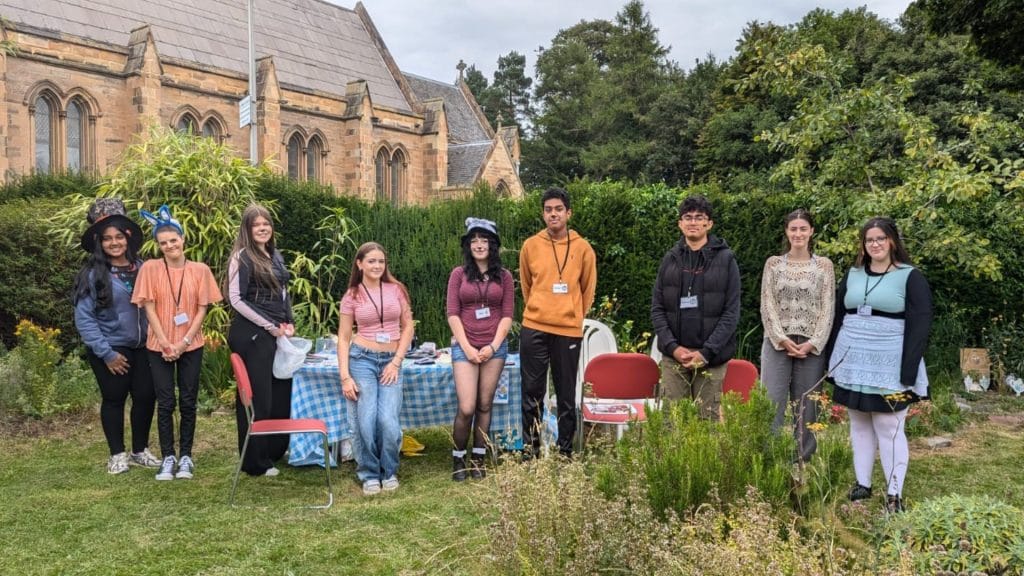
Our volunteer-led Mad Hatter’s Tea Party was a huge success, earning young organisers a 25-hour Saltire Award. Speaking of which, one of our young volunteers hit an incredible milestone of 500 hours, receiving a certificate signed by John Swinney!
Transform also launched an after-school board games club at Hawthornden Primary, where young volunteers help run sessions and support younger pupils. And our SQA students continue to excel in Volunteering Skills and have been instrumental in restoring garden pathways and making the space more welcoming.
It’s been a busy and rewarding year and we are so grateful to everyone – volunteers, mentors, partners, and the wider community who have supported Transform in 2025.
The Grassy Riggs have had a very eventful year, from Connect Online sessions, visits from our local Community Police Officers, and Dalkeith Fire Brigade. Their knitting and crochet group supported a range of causes, from local hospitals & schools to knitting for Ukraine. They ended the year with their biggest project to date, putting together 50 care bags for Street Work Edinburgh, a homeless prevention project.
Midlothian Climate Action Network (MCAN)
Our colleagues at the Midlothian Climate Action Hub have been keeping busy too, with the launch of their themed circles focusing on Biodiversity, Energy & Heat, Reuse & Repair, and Food.
They’ve also been out at plenty of events, from conservation learning days to local community meals. And are already hard at work planning activities for 2026!
Communities Mental Health & Wellbeing Fund
Now in it’s fifth year, the Communities Mental Health & Wellbeing Fund supports Midlothian organisations to deliver activities that improve mental health & wellbeing, benefitting an estimated 1 in 25 residents.
This year, MCA is part of the first multi-year pilot, distributing £300k across three grant streams. Two funding panels supported scoring of the 58 applications and resulted in 7 large, 16 small, and 5 micro projects awarded funding. We are very pleased with the commitment of the scoring panel and the improved quality of applications. We wish all the successful recipients all the very best in setting up their activities and provisions.
Third Sector Summit
This year, we also lead on and organised two Third Sector Summits. The Third Sector Summits, established in 2018, were designed to strengthen equal partnership, support collaboration, and improve outcomes for people in Midlothian.
Held twice a year, they bring together third sector practitioners and Midlothian Health & Social Care Partnership (HSCP) to share practice, build relationships, and explore joint solutions. The use of Mentimeter at our recent Autumn Third Sector Summit, has enabled effective data collection and the creation of an action plan based on the feedback gathered.
Happy Holidays from MCA!
The end-of-year celebrations at MCA have been jam-packed, starting in November with our Conversation Café group going on a trip to Holyrood House in Edinburgh. Our Volunteer Hub had a festive makeover, hosting a cheerful holiday party for all of our volunteers.
So suffice to say, we’ll be taking a much needed break for the holidays – our office closes at 3pm on Thursday 18 December and will re-open on Monday 5 January 2026. Until then, have a wonderful new year and we’ll see you in 2026!
Midlothian Older People’s Assembly and Midlothian Health and Social Care Partnership welcome you to our Winter eNewsletter for older people. Full of positive advice, local organisations, groups and local resources to promote an informed, connected, resourced, and healthy winter season.
Here we offer some examples of the diversity of local organisations and groups working with older people and communities to promote good health, informed citizens, connectedness and well being.
Older people play an integral part in strengthening the social fabric of our communities; as workers, carers, volunteers, activists and connectors. We hope this newsletter may assist wellbeing in Winter for some of our Older citizens living in Midlothian.
View and download the newsletter by clicking the link below: