Think Carer training introduces what it means to be an unpaid carer: how to recognise carers, the challenges they face, and how to refer them for support, alongside carers’ rights under the Carers (Scotland) Act 2016. For volunteers, it’s a useful way to learn how to identify and support the unpaid carers they may come into contact with. For volunteer managers, it offers insight into supporting volunteers who may be unpaid carers themselves.
Why It Is Important to Attend
While the main aim of a carer-friendly working environment is to support working carers in your organisation, it can also have additional benefits to your business. These include retaining skills and reducing recruitment costs, improving brand identity, improving employee wellbeing, improving productivity, reducing the gender pay gap and supporting gender diversity goals.
Training Details
Date: 7 September, 2026
Time: 10.30am-12.00pm
Trainer: Denise Millan & Naomi Knights from VOCAL Midlothian
Location: Midlothian Community Action, Volunteer Hub
All Third Sector organisations can apply for Community Benefits which are special conditions in a public contract which require suppliers or developers to make additional contributions to improve the economic, social or environmental wellbeing of the local area. This one-hour session will introduce Community Benefits, explain how how they can help your organisation and demonstrate how you can request them using online portals.
Why It Is Important to Attend
Posting a request for a Community Benefit may result in you receiving goods, services, advice, or other support at no cost to your organisation. Previous successful bids in Midlothian have included a £2,000 donation to improve a community garden, PPE kit for a youth volunteering project, and new play bark supplied and delivered to a playgroup worth £3,000.
This Tuesday, 10 February, is Safer Internet Day (SID) 2026 – a national online safety awareness campaign from the UK Safer Internet Centre. This year’s theme is ‘Smart tech, safe choices – exploring the safe and responsible use of AI.’
Everyone’s talking about AI, and with many children and young people using AI tools online, it’s important they have the skills and confidence to make safe choices when they are using smart technology. We’ve pulled together a selection of free resources, safety guides, learning materials, and helplines you can use or signpost to this Safer Internet Day.
Living With AI – a free and beginner-friendly online course by the Scottish AI Alliance.
TSI Learning Portal – online learning portal for third sector groups. Relevant courses include: ‘Cyber Security for Small Organisations and Charities’ & ‘Staying Safe Online’. MCA can provide a discount code for Midlothian groups to access these courses for free, contact us for more info.
The Young Women’s Movement Guide to AI – free online guidance and resource library for anyone who wants to be more informed about AI and its gendered impacts.
Resources for Youth Workers, Young People, & Families:
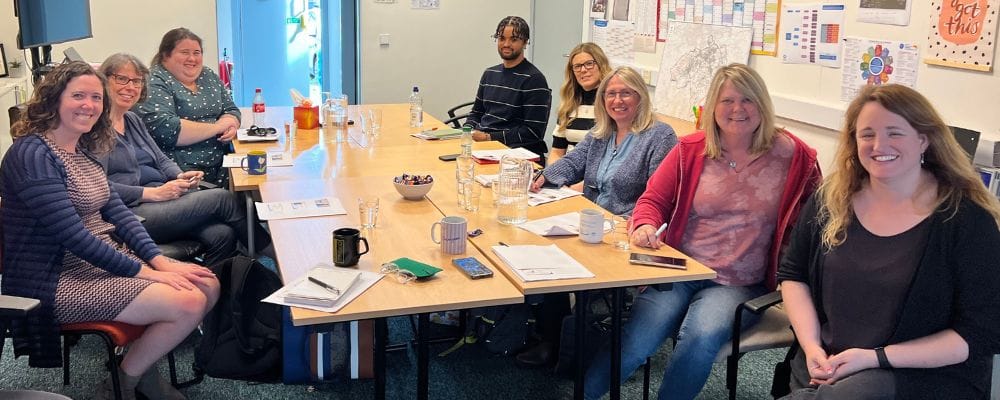
Midlothian TSI staff members recently took part in a bespoke Think Carer training session, delivered by VOCAL Midlothian.
VOCAL – Voice of Carers Across Lothian – is a charity that supports and empowers unpaid carers through individual support, information, training, and access to services. VOCAL work in partnership with employers across all sectors, supporting their ambitions to upskill managers and become a carer friendly workplace.
Think Carer Training Recap
The Think Carer training provided us with valuable insights into the role of unpaid carers and how to better support them. The session offered a chance to reflect on how carers are identified and the impact caregiving can have on their health & wellbeing. We explored practical tips for ensuring carers feel recognised and supported, while also considering the benefits this brings to those they care for.
Overall, the training highlighted the importance of acknowledging and supporting unpaid carers, offering tools and insight into the range of services VOCAL offers.
Supporting Carers in the Workplace
Caring responsibilities are often a hidden issue in the workplace, making it challenging for employees to seek support. In fact, one in five carers leave their jobs because balancing work with caregiving becomes overwhelming.
As the number of people with caring responsibilities continues to rise, it’s increasingly important for workplaces to create supportive environments where carers feel valued and can access the help they need to balance both roles effectively.
To address this, VOCAL partners with employers across sectors to help managers develop carer-friendly workplaces. In collaboration with VOCAL, we are hosting an Identifying and Supporting Carers at Worktraining session, specifically tailored for third sector leaders in Midlothian.
Join us online on Tuesday 5 November, 11:00 to increase your awareness of working carers, and how you can best support employees juggling work and care.
During this session, managers will reflect on the hidden impacts of caring and learn how to identify and support unpaid carers within their organisations.
#ProtectUnpaidCarers Campaign
The Scottish Government recently made the decision to not include unpaid carers as an eligible group for the COVID-19 vaccine in Scotland. We support VOCAL’s campaign to advocate against this decision and ensure the Scottish Government recognises the crucial role of unpaid carers. Read more about the campaign and learn how you can get involved here.
Contact
For further information on the training and support VOCAL can provide, please contact employers@vocal.org.uk.
See all of the support & services VOCAL provides on their website: www.vocal.org.uk
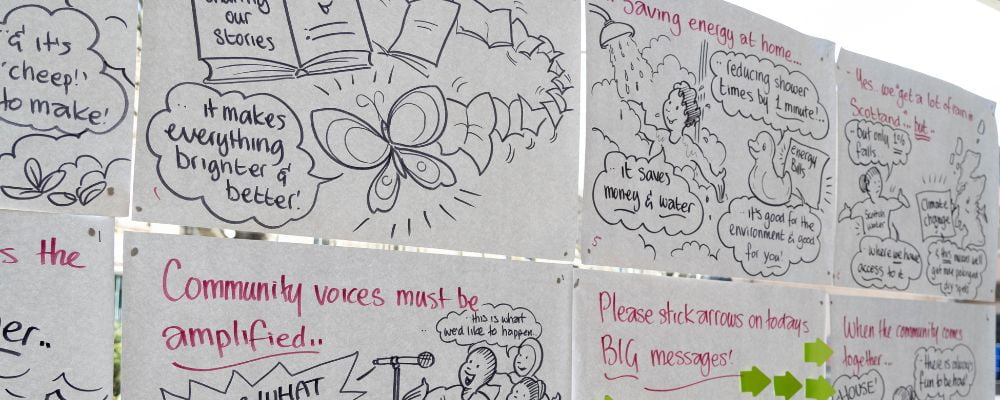
Community-led climate action and environmental projects are essential in tackling today’s environmental challenges, but accessing the right funding is often a barrier. That’s why we teamed up with our colleagues at the Midlothian Climate Action Network (MCAN) to host a workshop all about funding.
We reviewed some top tips to ensure your funding application is as good as it can be, including making sure that you write for an “intelligent outsider” and avoid acronyms and jargon.
Common mistakes to avoid
There can be a wide variety of reasons why funding applications are rejected, but in MVA’s experience there are a few comments that crop up over and over again. These include not clearly linking the activities proposed with the impact expected, not answering questions asked in the application and not providing proof for statements such as “we have a long history…”.
Click through to the presentation here:MCAN Funding Event Presentation FINAL to find a list of funders that provide funds for climate and environmental projects within Midlothian. For SCVO members, you can access their Funding – SCVO page that allows you to search for funding opportunities specific to the project you are planning.
Visit our Funding page to find out more about third sector funding in Midlothian.
Contact Us
We’re here to help! You can email us with any questions or to set up a one-to-one meeting, at info@mca.scot.
Last week, MVA held a Naloxone training and harm reduction session for third sector staff and volunteers in Midlothian. The session was delivered by Ross Ballantine, Clinical Support Worker with the Midlothian Substance Use Service, and David Boyd, Harm Reduction Worker from MELD and the Scottish Drugs Forum.
National Context
Scottish mortality rates to drug misuse and related deaths are the highest in Europe. The annual National Records of Scotland report provides insightful statistics of the ongoing drug crisis:
In 2023, 1,172 people in Scotland died due to drug-related causes—a 12% increase from the previous year.
Opiates and opioids were implicated in 80% of all drug-related deaths.
People living in the most deprived areas of Scotland are more than 15 times as likely to die from drug misuse compared to those in the least deprived areas.
Drug-related deaths have been steadily rising since 1996, with a much steeper increase since 2013.
This stark reality reinforces the need to raise awareness of harm reduction approaches.
Harm Reduction & Lived Experience
During the session David spoke of his own lived experience, sharing his journey through different support services, the mindset change that led to him to recovery, and the harm reduction work he does now. David’s message echoed a quote from Johann Hari,
“The opposite of addiction is connection.” – Johann Hari
His story serves as a powerful reminder of the role community, support, and understanding play in recovery.
Hearing David’s real-life experiences emphasises the importance of involving those with lived experience in service delivery. It underlines the significant impact that partnerships between mental health professionals, wellbeing staff, and individuals with lived experience can have in delivering more comprehensive support.
Following the discussion on harm reduction, participants were trained on how to recognise an overdose and administer naloxone.
What is Naloxone?
Naloxone is a life-saving medicine that can temporarily reverse the effects of opioids in the event of an overdose. It works by blocking opioid receptors in the brain, restoring normal breathing for someone who has stopped or is struggling to breathe due to an overdose. Administration of naloxone provides crucial time for emergency services to arrive and for further treatment to be given. In the UK it is legal for anyone to administer naloxone to anyone for the purpose of saving a life.
Always call 999 if you think someone is having an overdose. Administering naloxone is not a substitute for calling an ambulance.
How is Naloxone Administered?
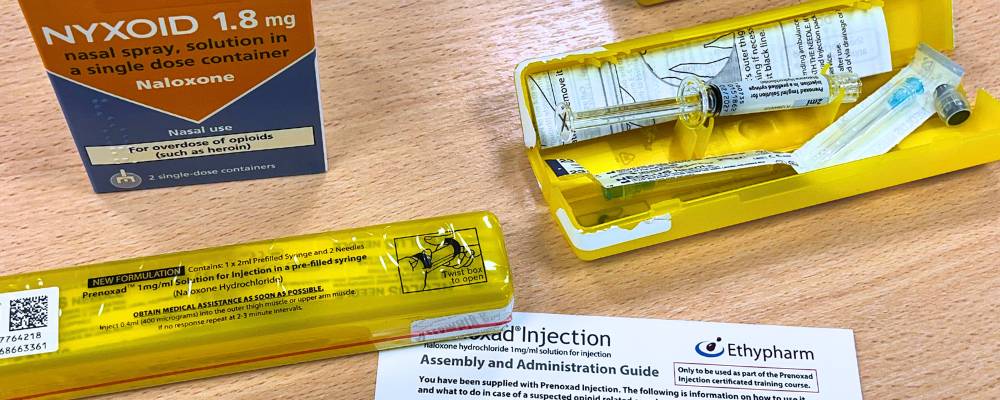
In Scotland, naloxone kits can come in two forms:
Nasal Spray (Nyxoid): A quick and easy method that involves spraying Naloxone into one of the person’s nostrils.
Injectable (Prenoxad): A pre-filled syringe that can be injected into the muscle, typically in the thigh, buttock, or upper arm.
Scotland was the first country in the world to introduce a national naloxone programme. The Scottish Government established the programme in 2010, aiming to reduce opioid-related deaths. Through this initiative, take-home naloxone kits are made widely available to those at risk of overdose, as well as to people who are likely to witness an overdose, such as family members, friends, or workers in the community. The availability of take-home naloxone has become even more crucial as Scotland faces a rise in synthetic drugs and polydrug use, both of which are contributing to the country’s alarming overdose statistics.
Takeaways from the Session
While the session offered practical naloxone training, the broader conversation touched on the challenges faced by third-sector and public services in supporting people with addiction. Cuts in funding resulting in low staff retention and reductions in services, make it difficult to provide consistent, trauma-informed care. Addressing these systemic issues is critical to improving outcomes for service users.
A recent report by the Scottish Drugs Forum gives insights into the experience of people in Medication Assisted Treatment (MAT), identifying the need to improve treatment. You can read the report here.
Special Thanks
We are incredibly grateful to Ross Ballantine for organizing the training and supplying take-home Naloxone kits, and to David Boyd for sharing his lived experience—his openness brought an important perspective to the session. Ross & David are happy to arrange similar training for organisations & volunteers in Midlothian. Please contact MVA for more details.
Getting the Message Out
As we continue to push forward with harm reduction efforts, it’s vital to raise awareness of harm reduction strategies like the provision of naloxone. Campaigns like #StopTheDeaths and International Overdose Awareness Day aim to amplify this message, ensuring more people understand how they can help prevent overdoses in their communities. You can find out more in the resources linked below.
We can all do something to help prevent drug related deaths.
Don’t worry if you missed the session, you can view the recording below:
You can download the slides from this session here.
How does easyfundraising work?
Brands see that easyfundraising has sent you to them, so they pay easyfundraising a commission when you start your shop from the easyfundraising website or app. If you make a purchase, a commission is generated, and they turn that into a donation.
Becky explained that there are over 8,000 retailers who will donate to your charitable organisation every time one of your supporters makes an online purchase through easyfundraising.
How do I sign up?
It is straightforward and free for organisations to register. Easyfundraising will undertake the due diligence and then set up an easyfundraising page on your behalf. They will even provide you with promotional materials and graphics to encourage your supporters to sign up with easyfundraising.
Your supporters can then go onto the easyfundraising page, select the retailer they wish to use, and shop as normal. The donation will be made at no cost to you or them. Supporters can also download the easyfundraising app or browser extension, which will remind them to use easyfundraising when making a purchase.
You will receive a quarterly donation from easyfundraising which is stress-free unrestricted funding. No reporting is required.
Participating retailers include Amazon, John Lewis, Tesco, and Argos. Your supporters can also raise funds when they book holidays, buy insurance, electricity, and office supplies!
ALISS is a digital tool operated by Health and Social Care Alliance Scotland (The Alliance) that allows groups and organisations to find or share information on local resources, services, groups, and support.
Why should you use ALISS?
ALISS allows you to share services, activities, and resources that help;
Enable social connection
Assist people to self-manage their long-term conditions
Support outdoor or physical activity
Access digital technology
Outside websites and directories pull information from ALISS, these include:
The information they use is automatically updated when it’s edited on ALISS.
How do you use ALISS?
There are different ways to use ALISS:
To search for information
To upload information
For community mapping
For signposting
For creating your own directory/ embedding on your website
When searching for information, it’s helpful to utilise the search filters.
How do I add to ALISS?
There are three main ways to get information on ALISS:
Basic Account – Good for one-off events/ postings, information approved by ALISS
ALISS Editor – Good for posting in bulk, doesn’t need to be manually approved by ALISS
Claimed Organisation – Claim your own organisations information, take responsibility to ensure it is accurate and up to date. Edits don’t need approval from ALISS
ALISS for Alexa
ALISS can now be used on the Amazon Alexa app and voice devices. By using voice commands, like “Alexa, search My Scottish Community for walking groups.”, those with low digital literacy or who may have a physical condition or disability, can stay connected to their communities and access the support they need when they need it most.
For more information, and how to set it up check out these articles: